By Rina Amiri
August 15 marked five years since the Taliban seized power in Afghanistan and swiftly instituted policies reversing decades of progress advancing the rights of women and girls. Just over two weeks later, on August 30, the last U.S. aircraft left Afghanistan, ending America’s longest war. From 2001 to 2021, Afghan women and girls’ rights expanded in dramatic and important ways across education, healthcare, and political and labor force participation. The 2009 Elimination of Violence Against Women law criminalized child marriage, forced marriage, and domestic violence.
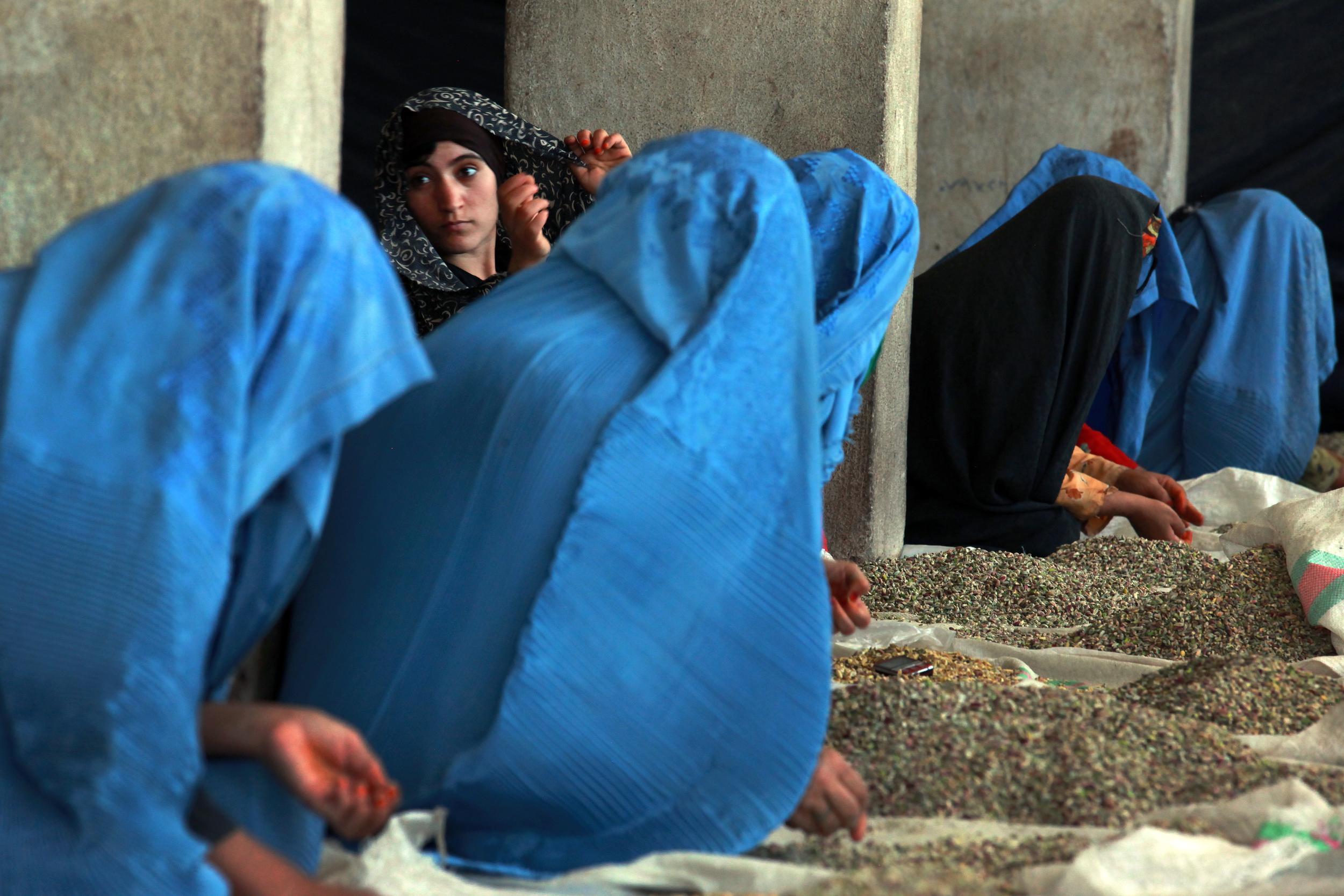
Today, Afghan women have systematically been erased from public life and face draconian restrictions across the board, under a system that many are increasingly referring to as gender apartheid. Meanwhile, the international community’s engagement with the Taliban regime has done nothing to improve the situation.
In this edition of “Why It Matters,” The Alliance’s Rina Amiri, the former U.S. special envoy for Afghan Women, Girls, and Human Rights, discusses how the Taliban have treated Afghan women and girls over the last five years, how the international community has responded, and what can be done to help protect and promote women’s rights. She recently laid out some of these arguments in a more in-depth essay in Foreign Affairs.
What is the situation for Afghan women and girls five years after the Taliban's takeover?
Amiri: Over the course of the last five years, the Taliban has systematically stripped Afghan women and girls of their rights, including by banning education above sixth grade, employment in most sectors, restricting their movement, obstructing access to health care, dismantling protection institutions, weakening protections against child marriage, and creating a more permissive environment for violence against women.
The regime has expanded and entrenched these measures through over 160 decrees, enforced through the 2024 Law on the Promotion of Virtue and Prevention of Vice. These are not simply odious human rights violations targeting women and girls, but the centerpiece of the Taliban’s authoritarian and extremist state-building project. The same ideological vision that has banned girls from school has eliminated political opposition, subordinated the judiciary to religious authority, silenced independent media, weakened civic institutions, and provided a permissive environment for extremist groups.
How has the international community responded to the Taliban’s anti-women policies?
Amiri: While there has been broad condemnation of the Taliban, many foreign governments unfortunately have steadily expanded their engagement with the Taliban, even as the repression of women and girls has intensified. Russia is the only country that has formally recognized the Taliban government, but others have moved toward de facto recognition. China has accepted the credentials of a Taliban-appointed ambassador, and regional countries continue to deepen diplomatic and economic ties with Kabul.
In Europe, this trajectory is increasingly visible. The European Commission recently hosted Taliban officials in Brussels for talks on migration. Meanwhile, Germany has expanded direct cooperation with the Taliban to facilitate deportations, reportedly agreeing to accept additional Taliban-appointed diplomats and, in July, deporting an Afghan without a criminal record for the first time since the Taliban’s return to power.
But in the last five years, it has become clear that engagement with the Taliban has not moderated the group’s behavior with respect to the rights of women and girls or led to sustainable outcomes in other priority areas. The UN Analytical Support and Sanctions Monitoring Team characterizes the Taliban’s relationship with al-Qaeda as “close and symbiotic,” while other extremist organizations operate in Afghanistan. Agreements intended to control migration may suppress movement temporarily, but they do little to address the conditions that drive Afghans to flee.
This grim anniversary should serve as an opportunity for a fundamental reassessment of international policy toward Afghanistan. This review needs to extend beyond the question of how to manage relations with the Taliban. Governments need a clear-eyed assessment of which actors these policies marginalize, which are strengthened and emboldened, the end state such an engagement strategy creates, and the economic and security implications that will emanate from that order.
What can the United States and the international community do now to advance women's rights in Afghanistan amid the Taliban's draconian rule?
Amiri: To move toward a more viable path for stable and inclusive Afghanistan, the West and broader international community should limit engagement with the Taliban to existing diplomatic channels and embark on a process that engages and supports the Afghan actors at the forefront of resistance and the pursuit of a pluralistic, democratic, and stable Afghanistan. Afghan women — who have met the Taliban's repression with extraordinary acts of courage and built a formidable nonviolent resistance movement — should be at the center of such a strategy.
Yet, such an approach must begin with an acknowledgment of the West's own history of instrumentalizing Afghan women. The 2001 intervention in Afghanistan that overthrew the first Taliban regime and post-2001 U.S. and international policies in Afghanistan were justified by invoking the defense and support of the rights of women and girls, among other things.
But when the United States negotiated the Doha Agreement that paved the way for the Taliban's return, non-Talib Afghans — including women — were excluded and women's rights were absent from the terms of the agreement. To be sure, there is no moral equivalence between the failures of Western policy and the Taliban’s policies of gender apartheid. But there is a pattern that should not be repeated: placing Afghan women at the center of political narratives and excluding them when it is politically expedient. This history also leaves the United States and its Western allies with a moral responsibility to meaningfully support women’s political inclusion, rather than treating it as only an “internal matter” among Afghans.
In doing so, governments must move beyond symbolic consultations with a select few women to an approach that meaningfully integrates them in discussions about their country's future. When half the population is systematically erased, meaningful representation is paramount. There is precedent, most notably South Africa under Apartheid, where representatives of people excluded from South Africa’s governing institutions were given an institutionalized voice in international deliberations concerning their country. In Afghanistan — where a non-recognized regime is oppressing and excluding half of the population — the same principled approach is warranted.
The frequent argument that Afghan women's movements are too fractured to identify unified leadership should not be a justification for doing little to help Afghan women. Such challenges have not prevented the establishment of representative mechanisms in other contexts. The UN has those lessons to bear in addressing such challenges. Afghan women have also given a great deal of thought to how such a mechanism can be established, and their ideas should be solicited. Such a mechanism should also be meaningful, not simply advisory. No significant diplomatic process involving the Taliban should be considered legitimate without the meaningful participation of women, including representatives from this mechanism should be considered legitimate.
For too long Afghan women have been pitted at the center of competing ideological narratives — rendered as symbols of progress or markers of hardline conservatism. They have had neither voice nor agency in developing these visions. Changing this approach is both a moral and strategic imperative.
© 2025 Alliance for Diplomacy and Justice.