Since returning to office in January 2025, the Trump administration has pursued what analysts have referred to as a “maximum pressure” campaign on Cuba. For six months, the U.S. has imposed an oil blockade on the island, imposed harsh sanctions, and threatened military intervention. The human impact has been severe and staggering.
Administration officials have not hidden the fact that their agenda in Cuba is to force sweeping political change and economic liberalization in a sovereign nation. A July 2026 State Department report deemed Cuba “a unique threat to American homeland security” and blamed the Communist government for “the George Floyd riots to the rise of antifa.” These claims demonstrate an administration agenda that does not align with the reality on the ground in Cuba, which has a small military and struggles to provide its citizens with electricity.
This edition of “Why It Matters” looks at how the Trump administration has changed U.S.-Cuba policy and why, how these policies have impacted the Cuban people, and what a better approach would be.
How has the Trump administration changed U.S. policy on Cuba, and why?
Just days after taking office, Trump reversed late-term steps taken by the Biden administration to ease relations with Cuba. Secretary of State Marco Rubio has asserted that Cuba meets the criteria for re-designation as a State Sponsor of Terrorism, citing Havana’s alleged ties to Colombian armed groups, Hamas, Hezbollah, and Iran, as well as Russian and Chinese intelligence facilities on the island. A June 2025 National Security Presidential Memorandum imposed strict U.S. travel restrictions, limited financial transactions with Cuban military-linked entities, and reinforced the decades-old embargo.
After the capture of Venezuelan President Nicolas Maduro in January 2026, the administration halted Cuban oil imports from Venezuela, which had been Cuba’s primary fuel supplier for decades. Trump declared on social media that there would be “no more oil or money going to Cuba.” Testifying before the U.S. Senate Committee on Foreign Relations, Rubio made clear that regime change in Cuba is a precondition for lifting the broader embargo.
Administration officials have said that the goal of its policy is to force political and economic liberalization, including the potential removal of President Miguel Díaz-Canel, with Trump suggesting that Cuba would soon “fall of its own volition.” The administration has said that this pressure campaign is aimed at the Cuban government, not the Cuban people. But it is virtually impossible to target the regime alone or disentangle the economic impacts. Cuban citizens are, in fact, bearing the brunt of these policies, which are compounded by the decades-long embargo.
How have these policies impacted the people of Cuba?
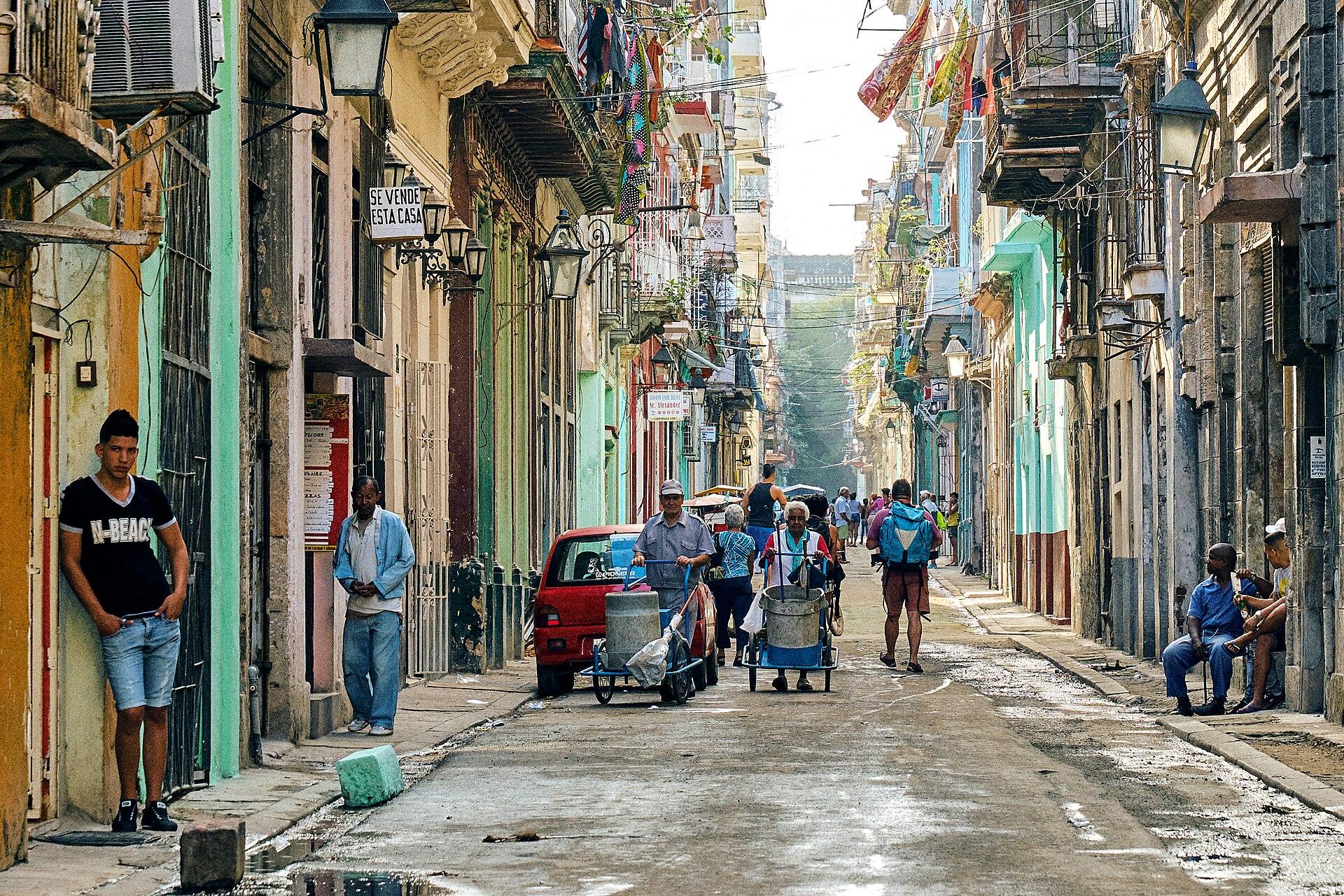
The impact of this campaign on ordinary Cubans’ daily lives has been severe and immediate. By February 2026, the effective blockade on Venezuela oil shipments reduced Cuba’s fuel imports by roughly 90 percent and pushed the country toward a full-scale humanitarian and economic crisis. Ongoing rolling blackouts affect the vast majority of Cuba’s roughly 11 million residents, with families turning to wood and coal for cooking as a result of constant power outages.
The healthcare system has been hit especially hard. UN officials who visited the island in May reported that hospitals were suspending surgeries and could not keep equipment running. Additionally, electricity, fuel, and other shortages are disrupting emergency procedures as well as the functioning of blood banks and other vital services that would normally support immunization programs and maternal and child health.
A UN spokesperson said the secretary-general is “extremely concerned about the humanitarian situation in Cuba,” and warned that it will worsen if oil needs are not met. To be sure, Cuban government mismanagement has played a role in driving the many economic and humanitarian challenges facing the island nation. But the Trump administration’s pressure campaign has accelerated these crises, which could have extraordinarily destabilizing impacts throughout the Western Hemisphere.
What would a better U.S. approach to Cuba look like?
A more effective and humane approach for U.S. policy on Cuba would separate legitimate U.S. foreign policy concerns — such as the Cuban government’s political repression and refusal to hold democratic elections — from measures that impose cruel humanitarian costs on Cuban citizens. While sanctions can be a legitimate foreign policy tool in certain situations, here it risks undermining the very outcome that the administration claims it seeks.
The United States is the closest land mass to the island. As the Trump administration continues to worsen the island’s humanitarian crisis, many Cubans may feel forced to flee to American shores. The irony here cannot be overstated: the Trump administration wants to limit migration to the United States, yet its policies are fueling it.
A better path would be to maintain accountability for specific human rights abuses and security concerns while ensuring humanitarian channels remain protected from broader sanctions pressure. The U.S. should also cease obstructing international humanitarian efforts to address Cuba’s many challenges. Multiple countries and coalitions have already provided food and medical supplies as well as other equipment — this assistance could be even more effective if it is unobstructed.
Additionally, a more sustainable strategy would also require direct engagement with the Cuban government on concrete steps that it can take to address U.S. concerns regarding political prisoners and unfair labor practices. If Washington wants to see reduced Chinese and Russian influence in Havana, it should focus on improving bilateral relations, rather than punishing Cuba for pursuing its own diplomatic interests. This would be a more effective approach than focusing on regime change as the only acceptable way for civilians to see relief from the current man-made crisis. Ultimately, the U.S. does not have the authority to change another country’s government, which means it must rely on diplomacy to address U.S. concerns and interests.
© 2025 Alliance for Diplomacy and Justice.