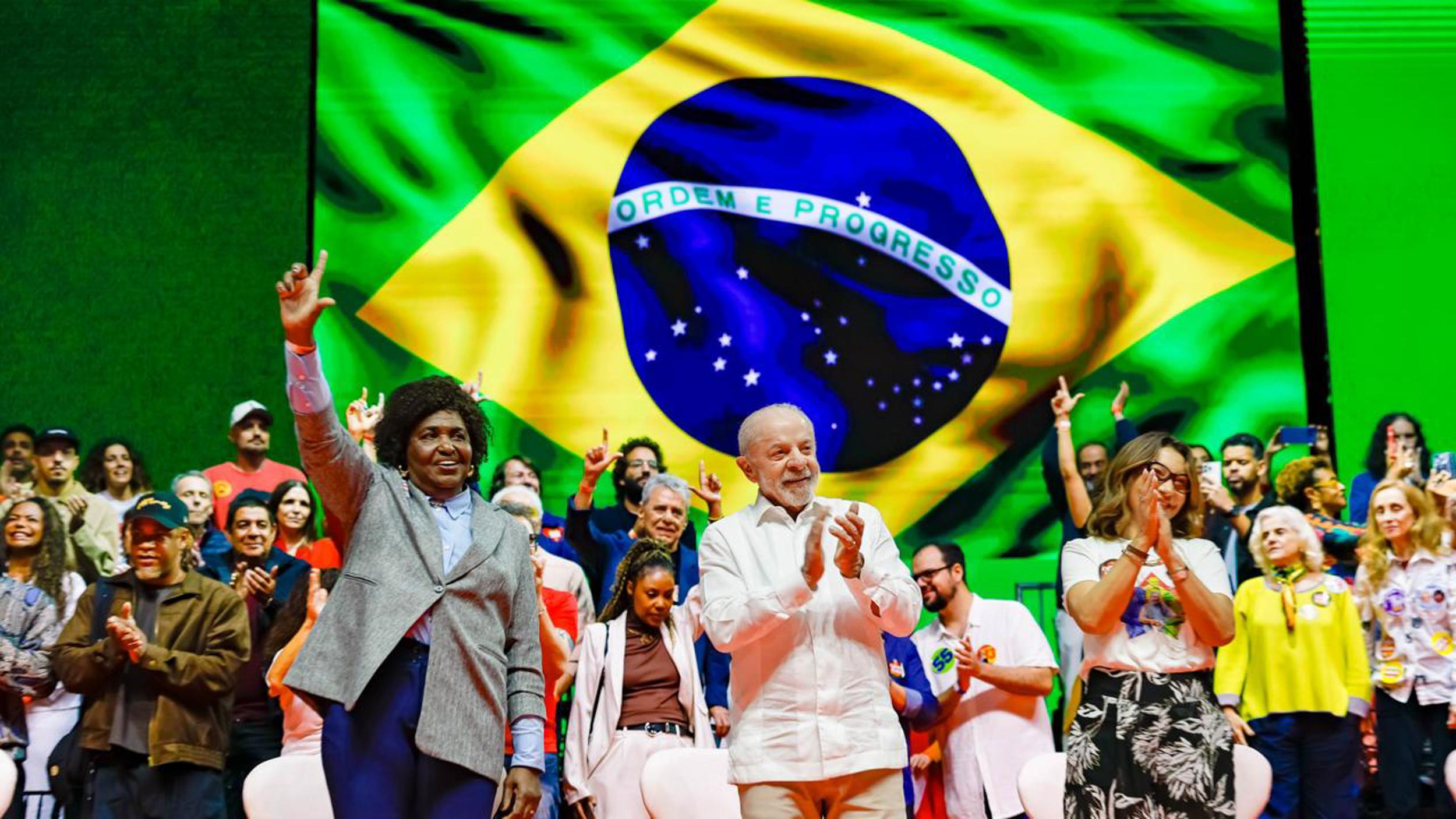
Brazil’s incumbent president, Luiz Inácio Lula da Silva, won a stunning victory in the country’s runoff presidential election on October 25, securing a historic fourth term. Lula came in second to Senator Flávio Bolsonaro, the son of former President Jair Bolsonaro, in the first-round vote. Since Brazil’s return to democracy in 1985, no presidential candidate has won the runoff after placing second in the first round.
Lula’s victory comes amid a meteoric rise for the far-right in Latin America in recent years. After the first round, it seemed inevitable that Bolsonaro would win. But an energetic and innovative digital campaign helped propel Lula to victory. The incumbent president gained over 10 million new votes compared to the first round. While voter abstentions typically rise in the second round, an additional 3 million Brazilians cast their ballots in the second round.
This edition of “Why It Matters” explains how Lula pulled off this shocking election and what Americans can learn that could strengthen our own democracy. Additionally, The Alliance spoke with Brazilians about the lessons they learned from the election and summarizes their comments below.
Why was Lula's election so shocking?
Since the 1990s, Latin American politics was largely dominated by left-wing leaders and politicians, often known as the “Pink Tide.” But that tide began to recede in the 2020s as conservative, often far-right, leaders like Argentina’s Javier Milei came to power. This shift accelerated in the last two years, with right-wing leaders coming to power in Honduras, Chile, Bolivia, Costa Rica, Peru, and Colombia.
Brazil has also trended rightward in recent years. The new Brazilian Congress, elected in early October, is considered the most right-wing in the country’s democratic era, and is expected to focus on a slate of conservative policies such as cutting government spending and rolling back protections for the Amazon rainforest. The rapid rise of evangelical Christianity has also tilted Brazil’s cultural and political landscape in a more conservative direction. Moreover, conservative candidates other than Bolsonaro received nine million votes in the first round. Those votes were expected to go largely to Bolsonaro, but many instead went to Lula in the second round as part of the 10 million additional voters he gained.
Another obstacle Lula faced was U.S. interference. According to Reuters, two senior State Department officials directed a U.S. effort to bring the Bolsonaro family back to power. The plot originally aimed to restore Jair to power, but shifted in 2025 after he was convicted of attempting a coup following the 2022 elections. U.S. policies aimed at weakening Lula and bolstering the Bolsonaros included designating Brazilian gangs as foreign terrorist organizations to present Lula as weak on crime and sanctioning a Brazilian judge who was investigating Jair. The Trump administration also revoked the visas of eight Brazilian Supreme Court justices and imposed 50 percent tariffs on Brazil in response to alleged “persecution” of Jair.
On the eve of the election, the United States suspended consular services in Brazil, citing unspecified “security concerns” in what was believed to be a last-minute attempt to convey lawlessness in the country. After Flavio’s defeat, the Trump administration helped him flee Brazil, where he faced potential corruption charges and had been ordered to surrender his passport.
What changed between the first and second rounds of voting?
Lula’s first-round campaign was lackluster and had a particularly weak digital strategy. The incumbent president acknowledged this himself, calling the campaign his least organized. One observer described the campaign as “anachronistic” and “mostly offline.”
In the second round, his campaign pivoted in strategic and substantive terms. Lula’s team and supporters followed a playbook largely deployed by the right wing, focusing on populist appeals, mass mobilization, and coordinated online campaigns built around trending hashtags, search terms, and mass sharing.
Lula announced a series of economic measures to aid working-class people. In late September, Lula banned online gambling and unveiled plans for a debt refinancing program to help millions of low-income Brazilians. Ten days before the election, Congress approved reducing the workweek from 44 to 40 hours with no pay cut. Meanwhile, days before the election, a 15 percent increase in the country’s main welfare program, Bolsa Familia, took effect, benefiting 50 million Brazilians. On October 21, Lula signed a tax amnesty for 3.6 million small businesses and offered them low-interest loans.
Lula also benefited from online organizing from social media, influencers, informal messaging channels, and other online communities. A WhatsApp channel called “Lula’s Army” was particularly impactful. Before the first round, the channel had 50,000 to 60,000 members, but grew to nearly 11 million by the time of the second vote. In part, that growth was fueled by outrage over accusations that Meta, which owns WhatsApp and Facebook, favored Bolsonaro on its platforms. The channel’s founder, a leftist lawmaker named André Janones, used innovative strategies often employed by Bolsonaro’s campaign to beat algorithmic suppression, including wearing Brazil’s yellow soccer jersey, a symbol of the right, in his videos.
The digital mobilization was augmented by real-world organizing, especially among youth organizations. Mass demonstrations in support of Lula were organized around the country, including a million-person protest on Rio’s most famous beach on the eve of the election.
What lessons can be learned from the organizing and other activities that helped propel Lula to victory?
The Alliance spoke with several Brazilians, including activists, about the lessons they took away from this election. Their recommendations carry weight for democracy defenders across the United States and around the world. Here are our takeaways from their comments:
Lula’s victory demonstrated how — despite countervailing trends and structural obstacles — intense organizing and innovative strategies can lead to unlikely victories. Amid the far-right’s rise, Brazil’s election offers an inspiring model for movements in the United States and worldwide pushing back against authoritarianism and for democracy.
© 2025 Alliance for Diplomacy and Justice.